LOCATION
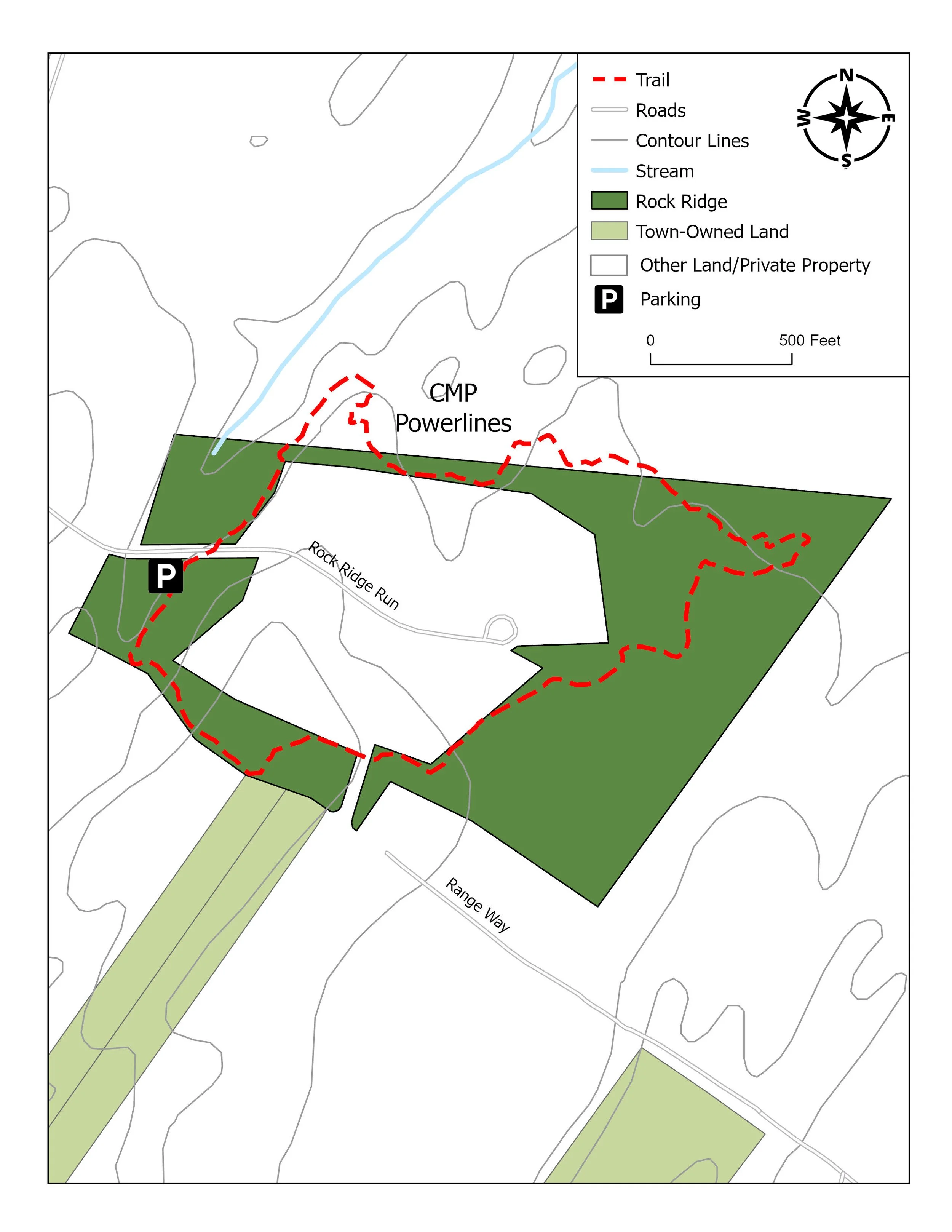
A trailhead and small parking area for Rock Ridge is located on Rock Ridge Run in Cumberland. Rock Ridge Run is off of Harris Road, roughly midway between Tuttle Road and Longwoods Road (see Google map below).
distance + SIZE
1.4 miles round trip / 39 acres
PUBLIC ACCESS
Visitors are welcome to explore the trails on foot, including hiking, running, cross-country skiing, and snowshoeing. Because of the proximity to homes, hunting is prohibited. Mountain bikes and motorized vehicles (except snowmobiles) are also prohibited. Snowmobiles are permitted only on the eastern portion of the property.
trail DESCRIPTION
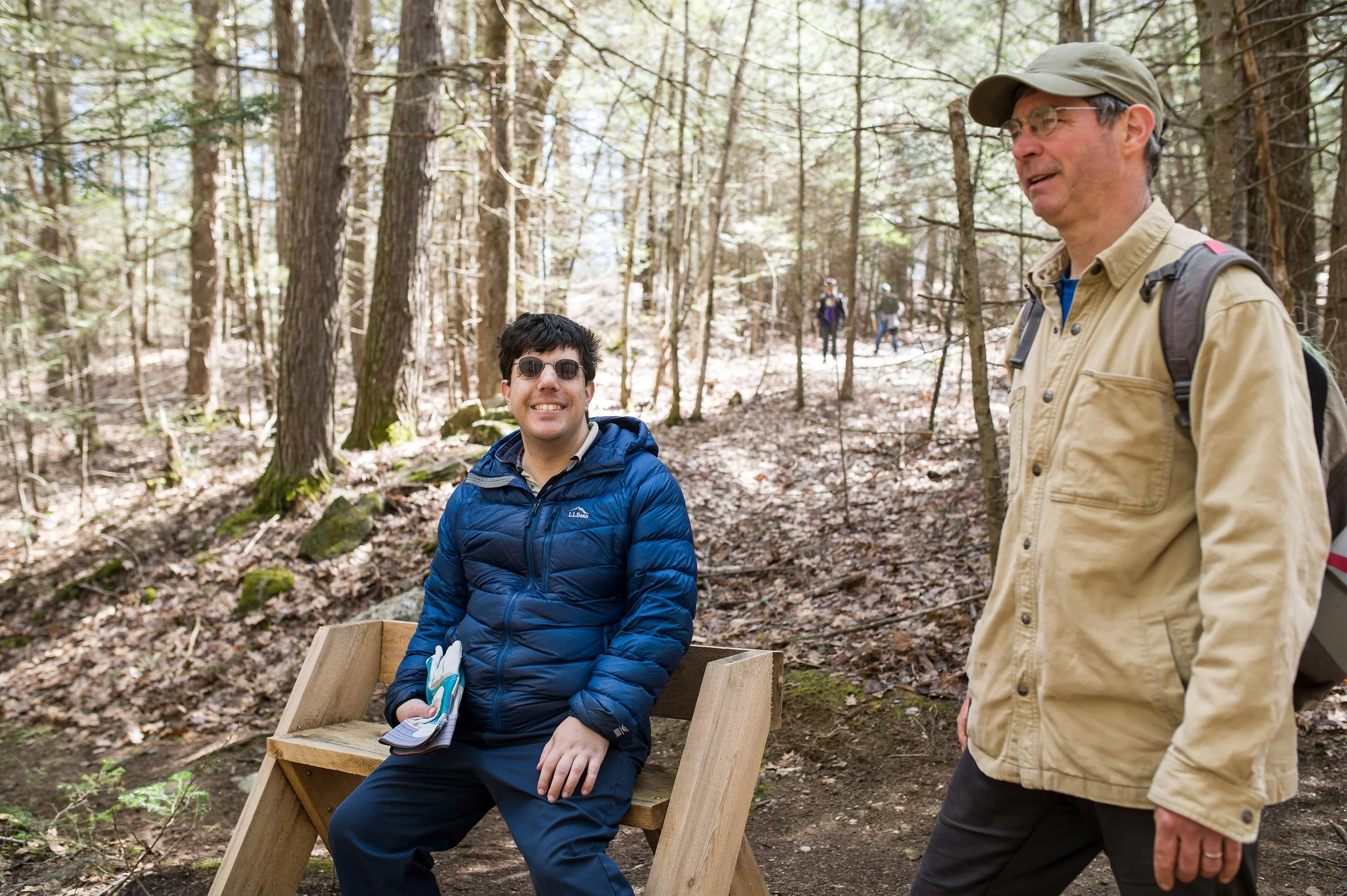
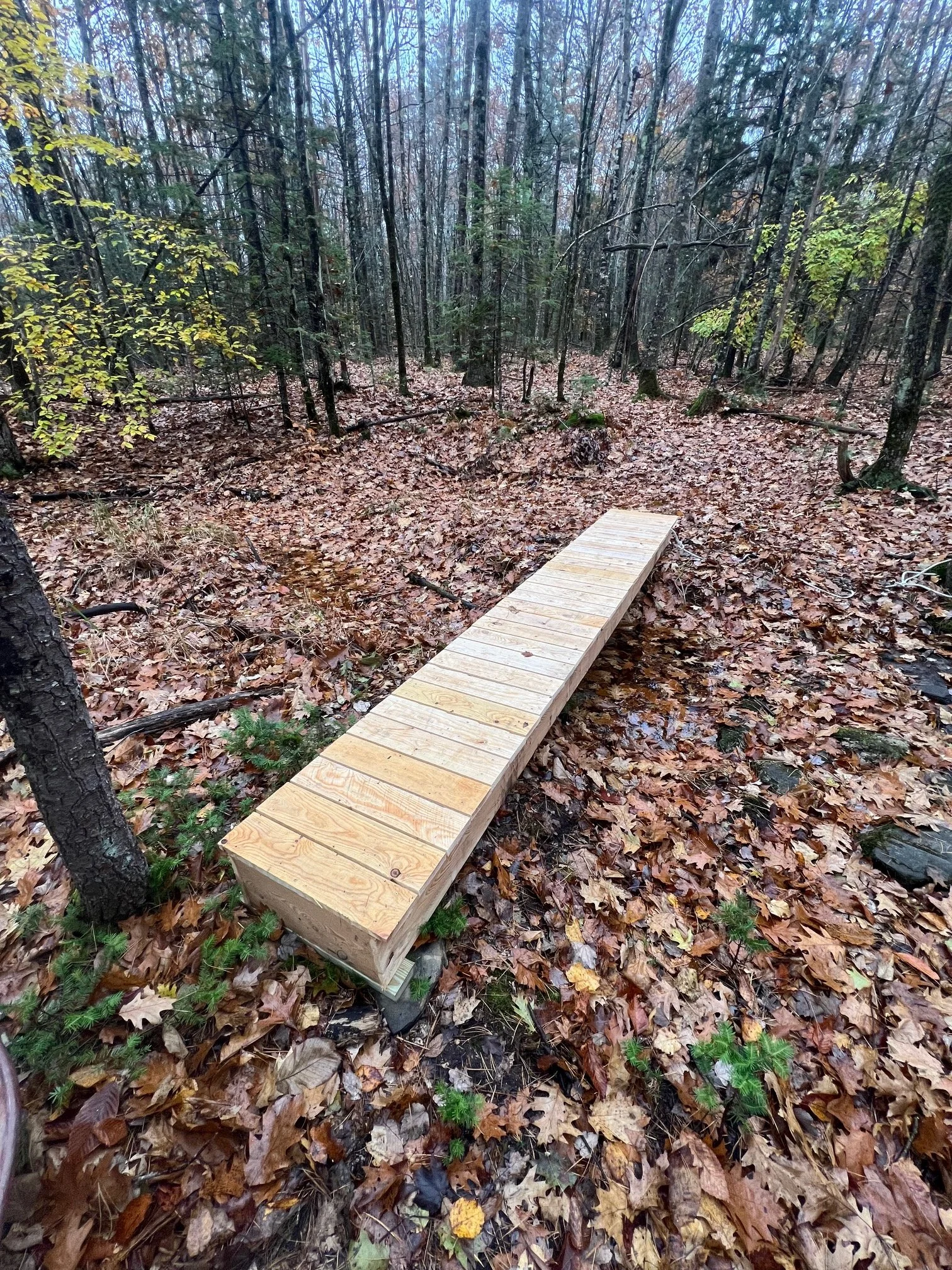
Please pay attention to trail markers that signal turns to avoid going off trail and onto private property. The trail ranges from approximately 2- to 4-feet wide and has three foot bridges that are 2.5 feet wide. The terrain is often wet and contains some uneven surfaces. There are three benches for resting at various spots along the loop.
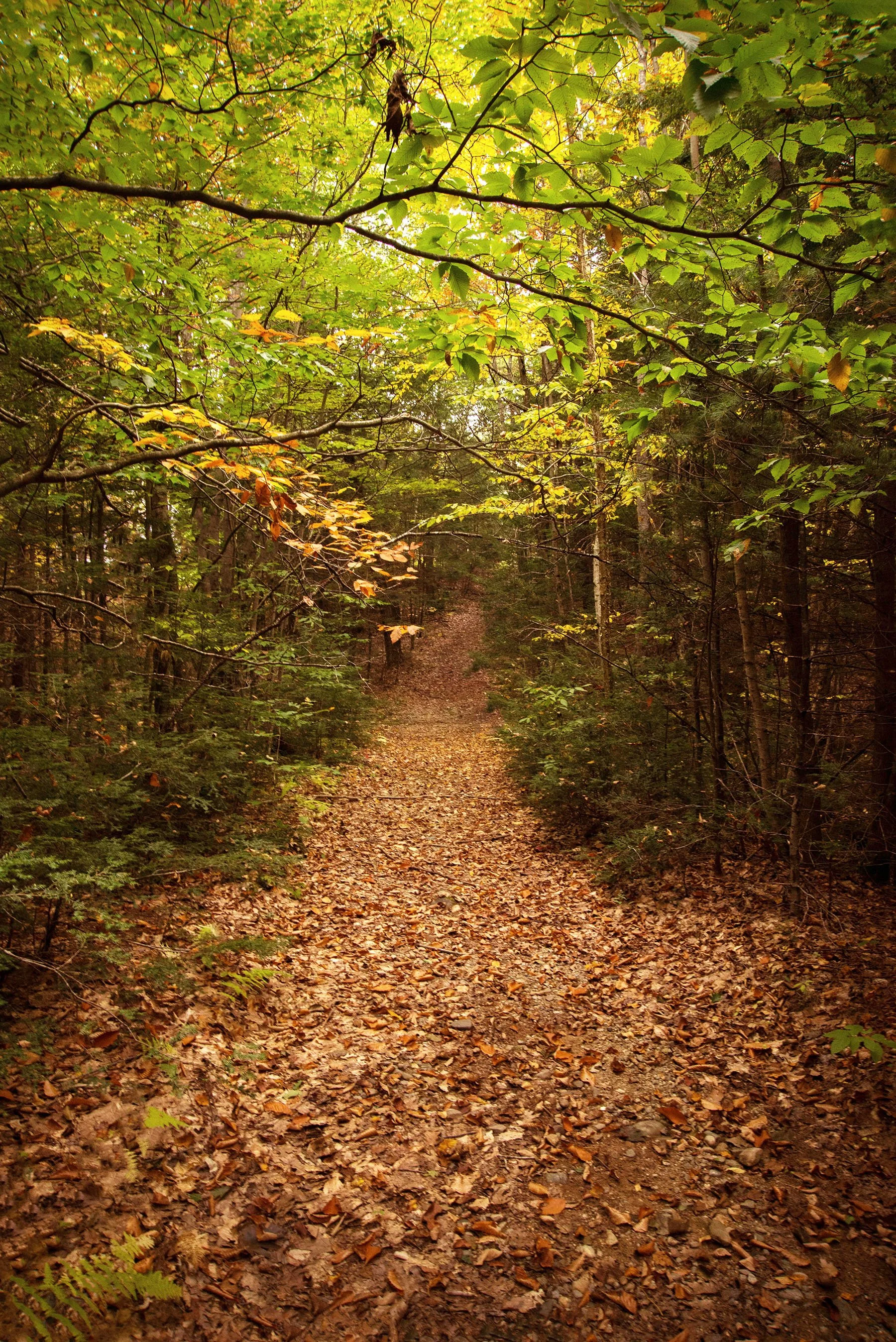
From the parking area, the trail heads south and follows a stream through thick woods. It is initially wide with good footing before heading up a steep, rocky hill. A short stream crossing about halfway around the loop requires stepping across stones. The trail then includes a portion that travels along the power line. The last part, before arriving back at Rock Ridge Way, is narrow and rooty.

PROPERTY DESCRIPTION
Rock Ridge Preserve is a 39-acre wooded property owned and managed by CCLT. The land was donated to CCLT as part of the subdivision development. CCLT was deeded the property by the developer in 1998.
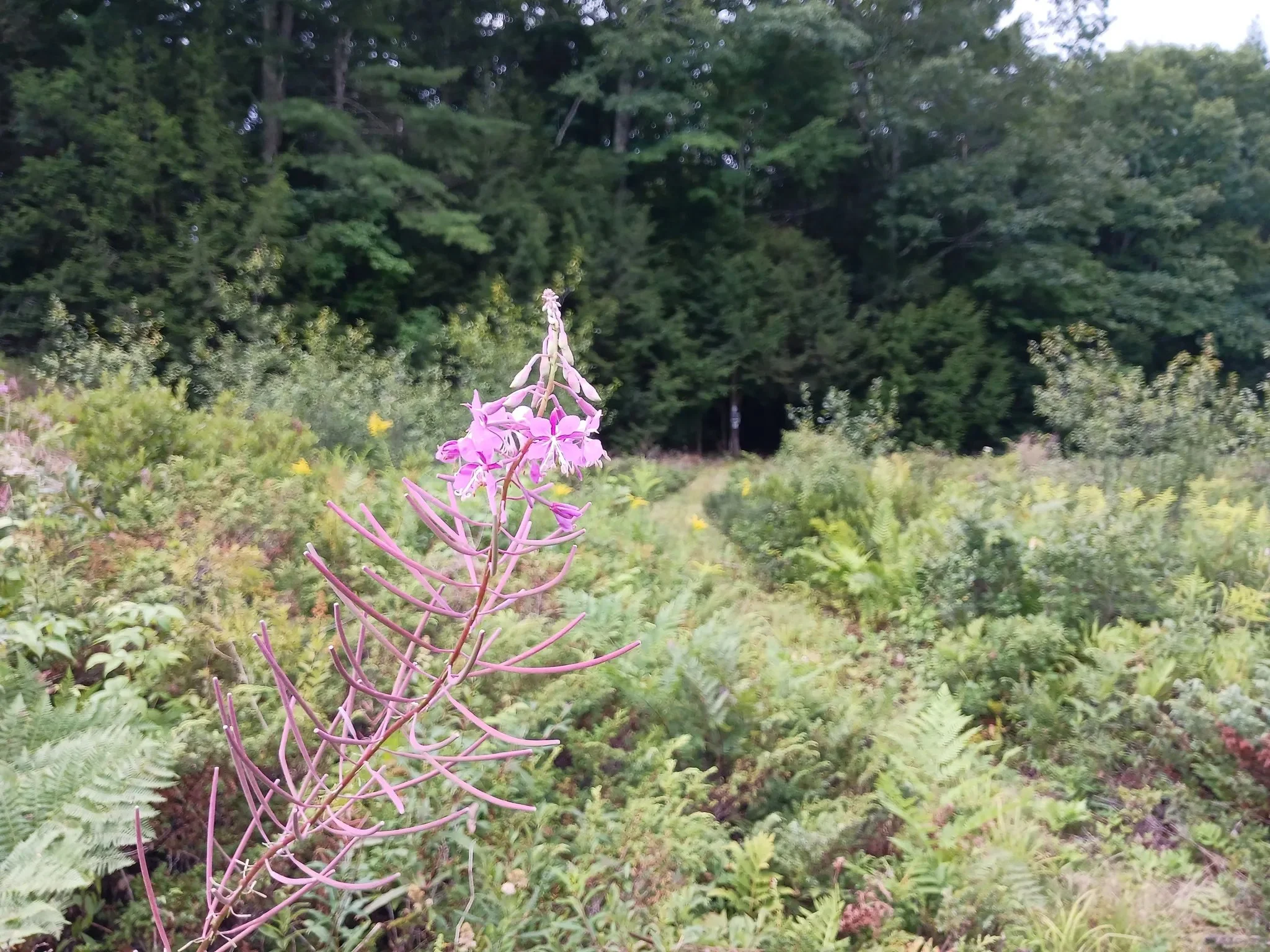
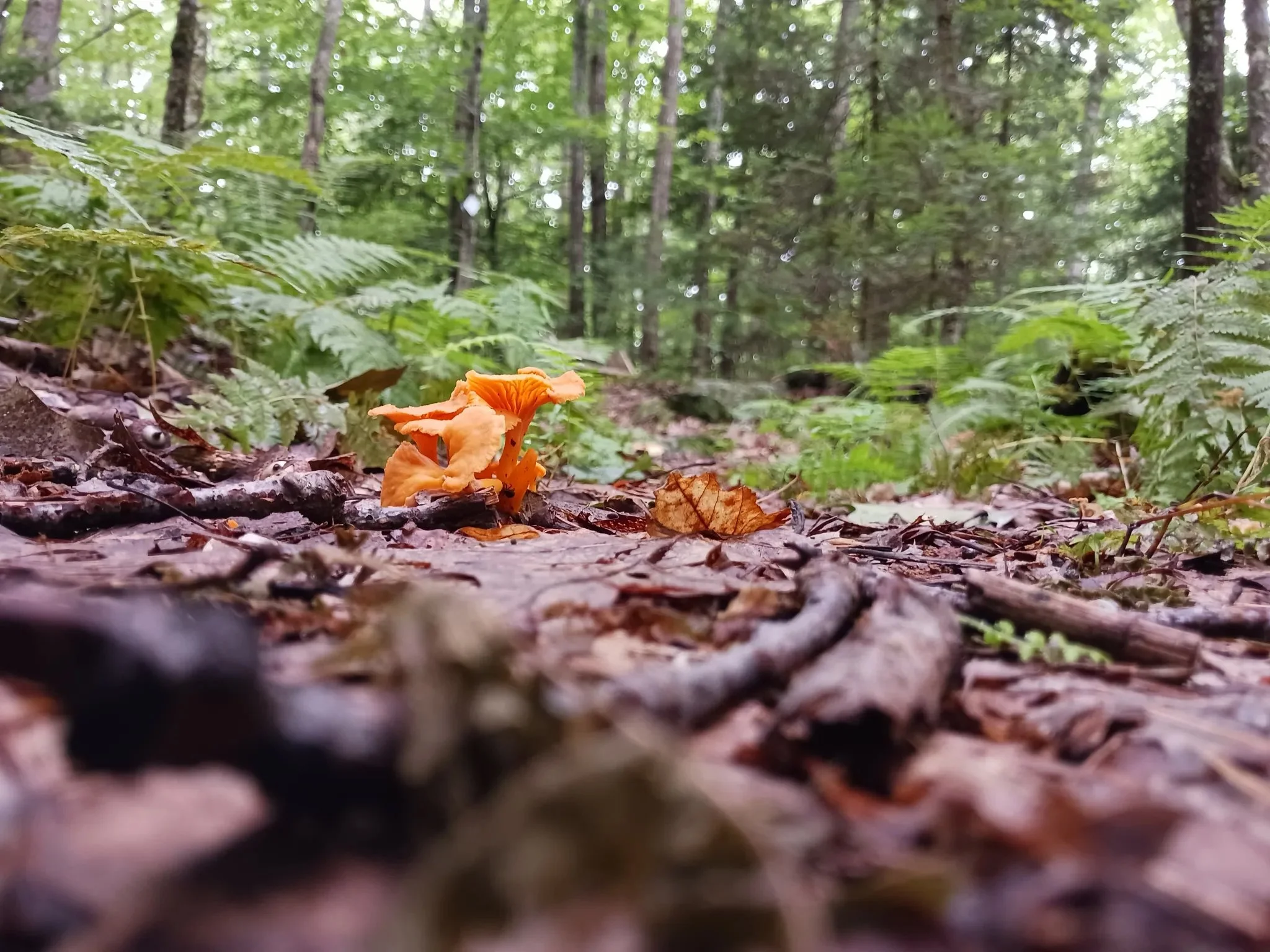
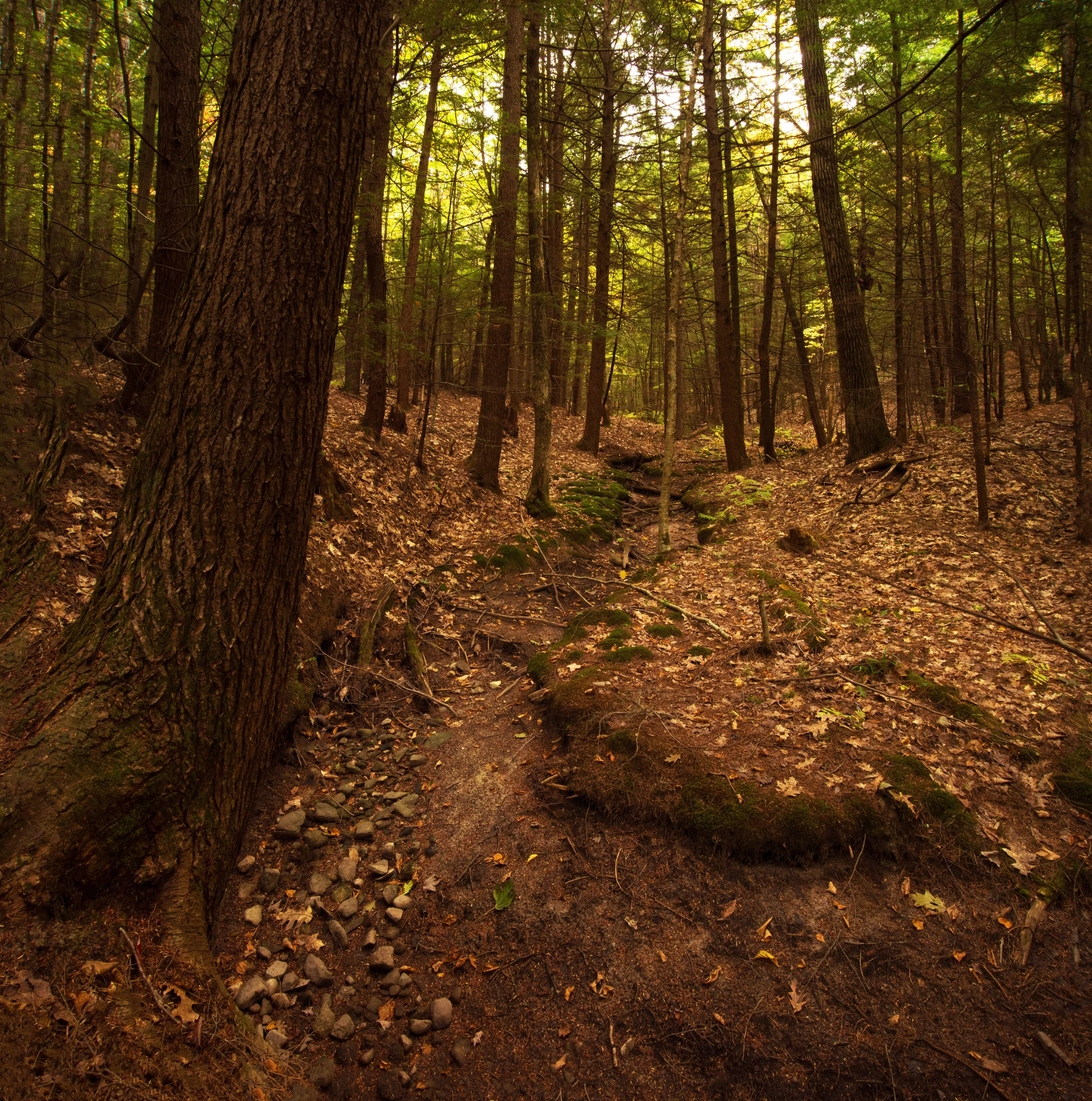
This property contains a stream, several areas of wetlands, and rocky ledges. It is heavily wooded with a diversity of hardwoods and softwoods, including hemlock, pine, birch, maple, beech, oak, alder, and ash. Wild berries and wildflowers grow at the open edges. The variety of habitat provides safe cover and food for many types of wildlife, including deer, coyote, fox, snowshoe hare, grouse, turkeys, and numerous other birds. Remnants of two old stone walls, which would have defined pastures or boundaries, are evidence of past farming.